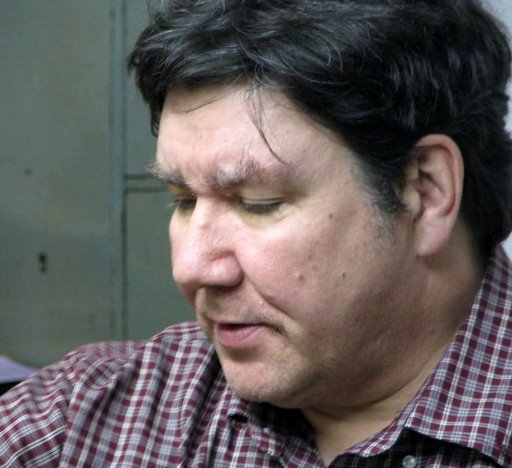
1. How long have you been playing chess? Have you played it consistently since you started, or were there lulls in your play? How did these lulls affect your performance?
I've been playing chess since I was 8. My father taught me the moves so that I could follow the moves in the Fischer-Spassky match of 1972. I started winning games against my father when I was 10, and played in my first tournament at the 1976 National Junior High School Championship (won by Jim Rizzitano).
At that time I went to the Waltham Community Chess Club, then at the library off the intersection of Main and Moody streets. I met Harry Lyman in 1977, when he gave a simul at the WCCC. He invited me to visit the Boylston Chess Club, offering a free 3-month trial membership. I started taking the B&M railroad from my home town of Lincoln all the way into Boston, and have been playing seriously ever since.
The only lulls in my chess have been when I was in college and grad school. The breaks dulled my tactical alertness at the board, which returned to normal after two or three tournaments.
2. Aside from playing games, what is your primary mode of training?
I took lessons from John Curdo in the early 80's when I was an expert, but I didn't learn anything specifically that I already knew. What John imparted to me was that if I wanted to become a master, I would have to work much harder.
My primary mode of training has always been playing over whole games on a chess board from books, with detailed annotations (not Informant symbols) from world-class players. Such books are becoming more difficult to find, because all the analysis in today's publications is verified (and increasingly manufactured by) chess engines. It's hard to learn from "perfect" chess literature! It's interacting with human ideas on a page, discerning the mistakes, and writing the corrections in the margins, that makes me improve the most.
3. What is the single most helpful method of improvement that you have ever used?
Despite my above answer, playing against computers. Between the ages of 10 and 12 my father worked for Lincoln Labs, and I played against one of the world's earliest chess computers, a prototype created by MIT's Artificial Intelligence department. The program "talked" through a carriage return from a printer; I needed a chessboard on the floor to play out the moves. I swore that I wouldn't join a chess club until I beat the chess program in a 5-game match. I finally beat it after 18 months of trying, and joined the WCCC the following week; thanks to that computer my first USCF rating was higher than most (1443).
Nowadays computers are so freaking strong that playing them all day would be futile, and I wouldn't learn much either.
4. What is your favorite opening to play as white? As black against e4? As black against d4?
For some reason, my games are all over the Internet. Why database administrators find the games of an erratic 2250 player so fascinating is a mystery to me, but anyone can discover my favorite openings with little effort. At last year's World Open, 7 out of my 9 opponents arrived at the board 20 minutes late, looking up you-know-who on their laptops.
5. Who are your favorite chess players and why?
Victor Kortchnoi, for his longevity -- I can only dream that I'll be more than a honorary 2200 player when I reach his current age.
Harry Lyman, for his classiness -- he showed me in so many ways that competitive chess and kindness are not mutually exclusive.
6. What is your favorite chess book?
David Bronstein's book of the 1953 Candidates Tournament in Zurich. I have read and re-read it three times slowly, and learn something new every time I reach the last page.
7. What book would you recommend for a friend who knows only the rules of chess?
Tactics is everything in chess, so I'd recommend a book that develops tactical awareness and combinations, such as 1001 Combinations by Fred Reinfeld. The best book I've ever read in this category is Tal's Winning Chess Combinations by Tal and Khenkin, but it's hard to find. If you see it, snap it up.
8. Do you play in in-person tournaments? What is your favorite tournament experience?
When I can. I'm over 2200, so the only way for me to improve is to play in the open sections of big tournaments, where I get my head smashed in regularly by pros who study at least 4 hours every day. Because I have a full time job, and because I don't want to show up at big tournaments half-cocked, I prepare a lot. This means that I don't play that often; there are only so many hours in my day, and the tournament preparation doesn't have a long shelf life in my crowded memory.
My favorite tournament experience was a summer open in Ghent, Belgium in 1999. I was the only American in a field of 700 players, and no one with laptops knew me. I played in an uncharacteristically free-wheeling style, sacrificing pawns, pieces, and Queens in the majority of my games, and tied for third place. The event had an impressive closing ceremony, with a buffet, champagne, and a commemorative tournament book (with all the games!) handed out to the players. I spent the winnings on a five-course gourmet meal in Paris.
9. Please give us a link to what you consider your best two blog posts.
This is my second post to a chess blog, so this and the last one are my favorites (so far).
10. What proportion of total chess time should be spent studying openings for someone at your level?
To improve, many, many, more conscious waking moments than I have now. Even if I won the lottery and could spend all my time studying chess, I'd have to share memorizing opening theory with sharpening middlegame tactics and refining endgame technique.
I've been playing chess since I was 8. My father taught me the moves so that I could follow the moves in the Fischer-Spassky match of 1972. I started winning games against my father when I was 10, and played in my first tournament at the 1976 National Junior High School Championship (won by Jim Rizzitano).
At that time I went to the Waltham Community Chess Club, then at the library off the intersection of Main and Moody streets. I met Harry Lyman in 1977, when he gave a simul at the WCCC. He invited me to visit the Boylston Chess Club, offering a free 3-month trial membership. I started taking the B&M railroad from my home town of Lincoln all the way into Boston, and have been playing seriously ever since.
The only lulls in my chess have been when I was in college and grad school. The breaks dulled my tactical alertness at the board, which returned to normal after two or three tournaments.
2. Aside from playing games, what is your primary mode of training?
I took lessons from John Curdo in the early 80's when I was an expert, but I didn't learn anything specifically that I already knew. What John imparted to me was that if I wanted to become a master, I would have to work much harder.
My primary mode of training has always been playing over whole games on a chess board from books, with detailed annotations (not Informant symbols) from world-class players. Such books are becoming more difficult to find, because all the analysis in today's publications is verified (and increasingly manufactured by) chess engines. It's hard to learn from "perfect" chess literature! It's interacting with human ideas on a page, discerning the mistakes, and writing the corrections in the margins, that makes me improve the most.
3. What is the single most helpful method of improvement that you have ever used?
Despite my above answer, playing against computers. Between the ages of 10 and 12 my father worked for Lincoln Labs, and I played against one of the world's earliest chess computers, a prototype created by MIT's Artificial Intelligence department. The program "talked" through a carriage return from a printer; I needed a chessboard on the floor to play out the moves. I swore that I wouldn't join a chess club until I beat the chess program in a 5-game match. I finally beat it after 18 months of trying, and joined the WCCC the following week; thanks to that computer my first USCF rating was higher than most (1443).
Nowadays computers are so freaking strong that playing them all day would be futile, and I wouldn't learn much either.
4. What is your favorite opening to play as white? As black against e4? As black against d4?
For some reason, my games are all over the Internet. Why database administrators find the games of an erratic 2250 player so fascinating is a mystery to me, but anyone can discover my favorite openings with little effort. At last year's World Open, 7 out of my 9 opponents arrived at the board 20 minutes late, looking up you-know-who on their laptops.
5. Who are your favorite chess players and why?
Victor Kortchnoi, for his longevity -- I can only dream that I'll be more than a honorary 2200 player when I reach his current age.
Harry Lyman, for his classiness -- he showed me in so many ways that competitive chess and kindness are not mutually exclusive.
6. What is your favorite chess book?
David Bronstein's book of the 1953 Candidates Tournament in Zurich. I have read and re-read it three times slowly, and learn something new every time I reach the last page.
7. What book would you recommend for a friend who knows only the rules of chess?
Tactics is everything in chess, so I'd recommend a book that develops tactical awareness and combinations, such as 1001 Combinations by Fred Reinfeld. The best book I've ever read in this category is Tal's Winning Chess Combinations by Tal and Khenkin, but it's hard to find. If you see it, snap it up.
8. Do you play in in-person tournaments? What is your favorite tournament experience?
When I can. I'm over 2200, so the only way for me to improve is to play in the open sections of big tournaments, where I get my head smashed in regularly by pros who study at least 4 hours every day. Because I have a full time job, and because I don't want to show up at big tournaments half-cocked, I prepare a lot. This means that I don't play that often; there are only so many hours in my day, and the tournament preparation doesn't have a long shelf life in my crowded memory.
My favorite tournament experience was a summer open in Ghent, Belgium in 1999. I was the only American in a field of 700 players, and no one with laptops knew me. I played in an uncharacteristically free-wheeling style, sacrificing pawns, pieces, and Queens in the majority of my games, and tied for third place. The event had an impressive closing ceremony, with a buffet, champagne, and a commemorative tournament book (with all the games!) handed out to the players. I spent the winnings on a five-course gourmet meal in Paris.
9. Please give us a link to what you consider your best two blog posts.
This is my second post to a chess blog, so this and the last one are my favorites (so far).
10. What proportion of total chess time should be spent studying openings for someone at your level?
To improve, many, many, more conscious waking moments than I have now. Even if I won the lottery and could spend all my time studying chess, I'd have to share memorizing opening theory with sharpening middlegame tactics and refining endgame technique.